Sustainable medical technology is shaped by the initial system-level decisions—not, as many assume, at the end of a product’s life cycle. System architecture, platform logic, power supply, verification, and documentation must be considered early on, as this reduces material use, energy consumption, and complexity without compromising safety, hygiene, or regulatory compliance.
Sustainable product development is not an additional task to be addressed at the end of a project. It is a development discipline that begins with the definition of the system architecture.
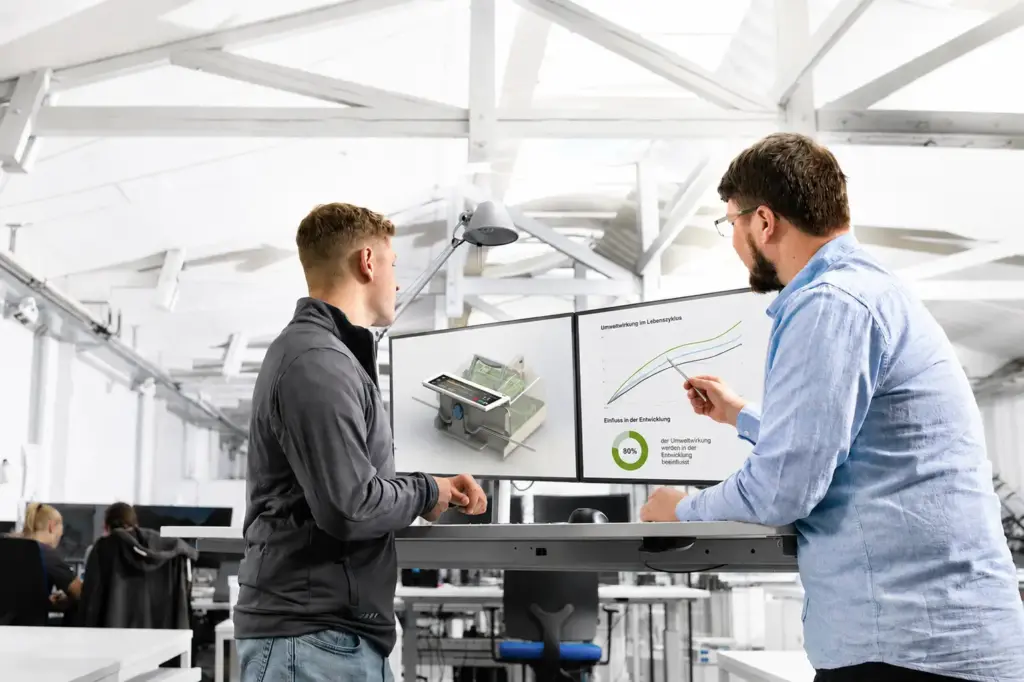
Discussions about sustainability in product development often tend to focus on materials, disposal, recycling, and reporting requirements. These topics are visible and are now subject to increasingly stringent documentation requirements. From our perspective, however, sustainability begins earlier—namely, at the point when a product is first conceived as a system. It is during this phase that decisions are made which later determine energy consumption, material usage, repairability, product variety, testing requirements, and service life.
A medical device must function safely, be easy to understand and operate without error, and perform reliably under real-world conditions. In addition, there are requirements related to hygiene, risk management, documentation, regulatory approval, serviceability, and economic considerations. Sustainability must not romanticize these issues, because a reusable component is of little help if questions regarding cleaning, wear and tear, power supply, or user guidance remain unresolved. A single-use part can be appropriate if it reliably ensures patient safety and sterility. The crucial question, therefore, is: Where does the function make the most sense?
A medical device must function safely, be easy to understand and operate without error, and perform reliably under real-world conditions. In addition, there are requirements related to hygiene, risk management, documentation, regulatory approval, serviceability, and economic considerations. Sustainability must not romanticize these issues, because a reusable component is of little help if questions regarding cleaning, wear and tear, power supply, or user guidance remain unresolved. A single-use part can be appropriate if it reliably ensures patient safety and sterility. The crucial question, therefore, is: Where does the function make the most sense?

Our projects demonstrate just how closely sustainability is linked to systems thinking. Mechanics, electronics, embedded software, EMC, verification, and certification are so closely intertwined that individual optimizations alone are rarely sufficient. An energy-efficient battery is of little use if the software consumes unnecessary power. A good materials concept loses its effectiveness if the device is difficult to open or inspect. A modular design remains theoretical if interfaces are defined too late. A platform only saves effort if it is clearly delineated against the specific risks of individual applications. Sustainability is therefore an important development discipline in its own right.
Our projects demonstrate just how closely sustainability is linked to systems thinking. Mechanics, electronics, embedded software, EMC, verification, and certification are so closely intertwined that individual optimizations alone are rarely sufficient. An energy-efficient battery is of little use if the software consumes unnecessary power. A good materials concept loses its effectiveness if the device is difficult to open or inspect. A modular design remains theoretical if interfaces are defined too late. A platform only saves effort if it is clearly delineated against the specific risks of individual applications. Sustainability is therefore an important development discipline in its own right.
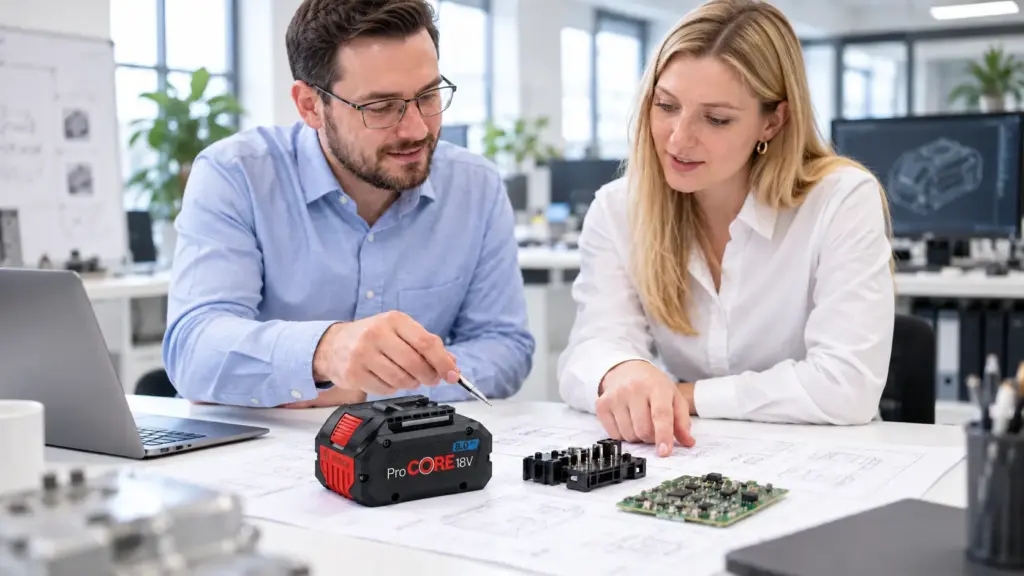
A common battery management software platform can support multiple devices if requirements, limitations, and safety considerations are professionally defined. A consistent display and user interface design provides users with guidance when usage scenarios remain comparable. A coordinated energy module simplifies procurement, testing, and service when service life, temperature behavior, and state of charge are accounted for early on. Good platform development, of course, also recognizes the differences. It separates the functions that can be shared from the components that must remain independent due to measurement principles, risk, hygiene, or application requirements.
A common battery management software platform can support multiple devices if requirements, limitations, and safety considerations are professionally defined. A consistent display and user interface design provides users with guidance when usage scenarios remain comparable. A coordinated energy module simplifies procurement, testing, and service when service life, temperature behavior, and state of charge are accounted for early on. Good platform development, of course, also recognizes the differences. It separates the functions that can be shared from the components that must remain independent due to measurement principles, risk, hygiene, or application requirements.
We’re not talking in abstract terms about reducing consumption, but about clear system boundaries. We’re talking about reusable software components, stable interfaces, clear documentation, and early testing. We’re talking about variants that are based on a common technical logic.
Of course, this also applies to verification. A product must meet defined requirements, and compliance with these requirements must be verifiable. Sustainable development benefits when testing reveals early on which assumptions are sound and which should be avoided. An EMC issue that only becomes apparent in the lab can affect the mechanics, layout, software, and schedule. A battery design that is tested too late can affect certification, service life, and maintenance. A platform that grows without a clear verification strategy may ultimately create more complexity than it reduces.
We are convinced that the coming months will bring many fruitful discussions on this topic. The industry recognizes that sustainability in medical technology must bring together the areas of safety, regulation, user benefit, and cost-effectiveness. It must also work in real-world products. It must remain manageable for development teams. And it must accept that not every solution looks spectacular.
This process doesn’t require grand promises, but rather sound decisions made at the right stages. We want to bring these decisions—in system architecture, platform strategy, energy supply, verification, and documentation—to light earlier on.