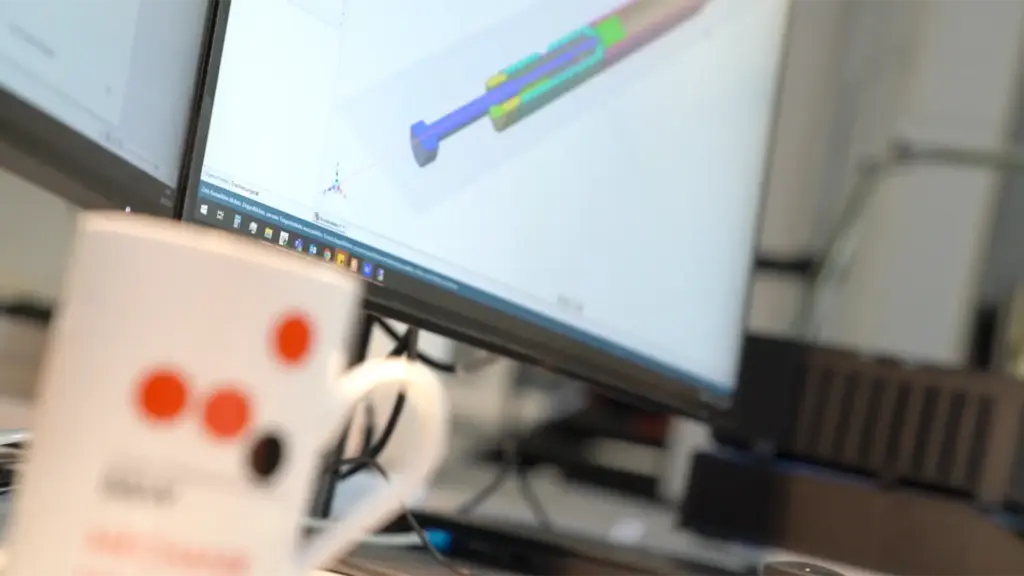
On September 17, 2026, I will be giving a technical presentation—together with Joachim Schütz—at the Treffpunkt Medizintechnik in Frankfurt am Main titled “Getting a Handle on EMC Risks Early On—Using Simulation and Expertise for Safe Product Development.” In the context of DeviceMed, the community magazine for professionals in the medtech industry, the presentation will address a key challenge in modern product development: EMC must be addressed at the very beginning of a project. Architecture, mechanics, electronics, software, and manufacturing must work together early on so that risks become apparent before they turn into costly, time-consuming, and complex issues in the lab.
For about twenty years, I have been involved in development projects in medical and device technology, and I consistently observe a similar pattern. As long as an initial prototype works in principle, the issue of EMC unfortunately tends to take a back seat. Then it becomes apparent too late. By that point, decisions have long since been made, and changes are already having a profound impact on the architecture, layout, mechanics, and schedule.
For me, therefore, EMC begins with understanding the system. We need to clarify early on which standards apply, in what environment the product will be operated, which emission and immunity limits are relevant, and which operating conditions could become critical later on. If I answer these questions thoroughly at the outset, I create a solid foundation for everything that follows.
For me, this is an absolutely crucial step in medical technology because products rarely operate in an ideal environment. Cables, accessories, adjacent devices, charging units, communication interfaces, and real-world usage conditions directly affect EMC performance. If we take these constraints seriously too late, we often end up merely reacting to symptoms later on. If we factor them in early on, we can develop our products in a more targeted and smoother manner.
A good system design saves a lot of effort in this regard. In my view, this includes a clear grounding and shielding strategy, short and high-quality return current paths, current loops that are as small as possible, and—where necessary—proper potential separation. That may sound rather dry at first. In practice, however, it often determines whether a product operates reliably or whether we have to resort to filters, shielding measures, and corrective actions.
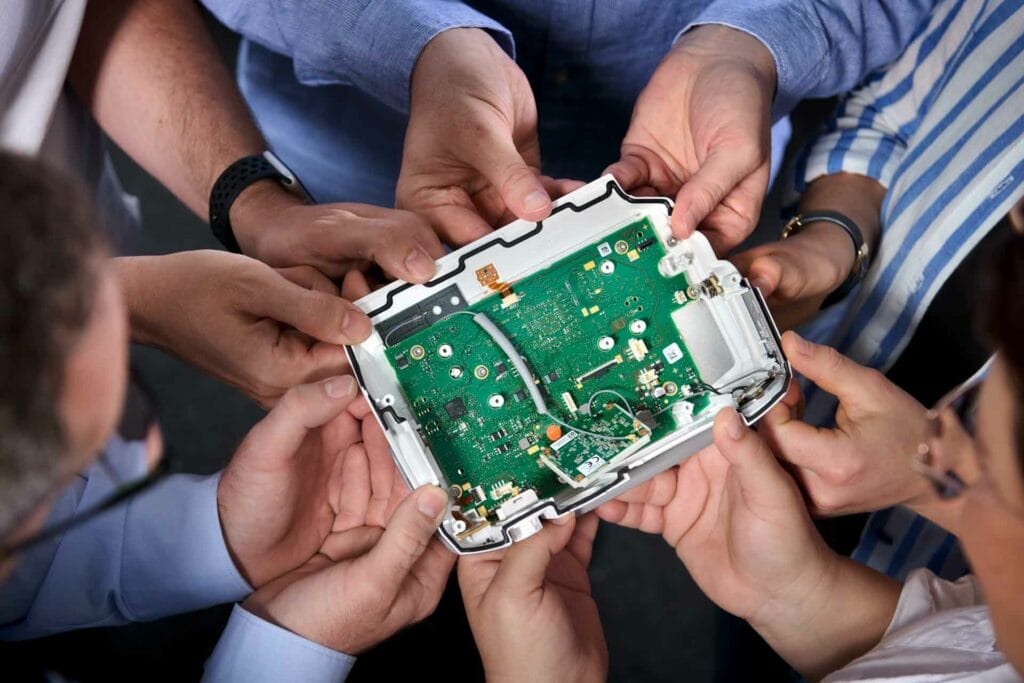
This also highlights a point that is important to me in projects:
EMC is not an isolated layout issue.
Mechanics, electronics, software, and manufacturing all play a role in determining whether a product operates smoothly or becomes prone to malfunctions. An unfavorable cable route, poorly routed return current, varying clock frequencies, an improper shield connection, or a last-minute enclosure change are often enough to throw a well-intentioned design off balance. That’s why we need coordination at this stage!
Simulations, for example, help us test assumptions and pinpoint weak points. Near-field analyses show where energy escapes unexpectedly or where coupling occurs. Pre-compliance measurements give us valuable insight into the status of development before formal testing begins. These steps help us reduce the number of optimization iterations and validate decisions earlier. For me, this isn’t about adding more theory to the project. It’s about ensuring a high-quality development process.
Need a checklist for this? Sure. Here’s the download.
Note: This is not intended to be exhaustive; it is provided solely as a sample template.