
Which change is worth making?
A single-use medical test kit contains plastic, electronic components, and a battery. After use, the device is discarded. What other changes would be useful to make a product truly sustainable? And which of these can actually be implemented under the conditions of medical use?
The overarching framework is provided by the 17 global Sustainable Development Goals of the 2030 Agenda. For product development, we draw on the concept of the circular economy: resources should be used sparingly, and materials should be kept in circulation. To this end, circular design begins with the product’s design itself.
We applied an evaluation process based on the 9R strategies of circular design. Using an STI rapid test as an example, we examined which approaches should take priority for further development. The result is a validated and well-founded prioritization of the sustainable improvement potential of the existing device.
The evaluation areas derived from the 9R strategies that are most important to us.
Use it once—and then toss it.
Let’s take a portable diagnostic device for sexually transmitted infections as an example. After a single use, the materials and electronic components built into it are also disposed of. We are therefore investigating how the value of these materials could be better preserved in a future generation of devices. This device allows us to examine questions regarding both its design and disposal: How are the components connected? Can the materials be separated? Is recycling planned?
A sealed housing and permanent connections limit disassembly. Hygiene requirements and single-use design restrict reuse. These conditions must be factored into the assessment before we determine a development path.
This study is an illustrative example of methodology. It describes neither a customer order nor a diagnostic device developed or approved by us.
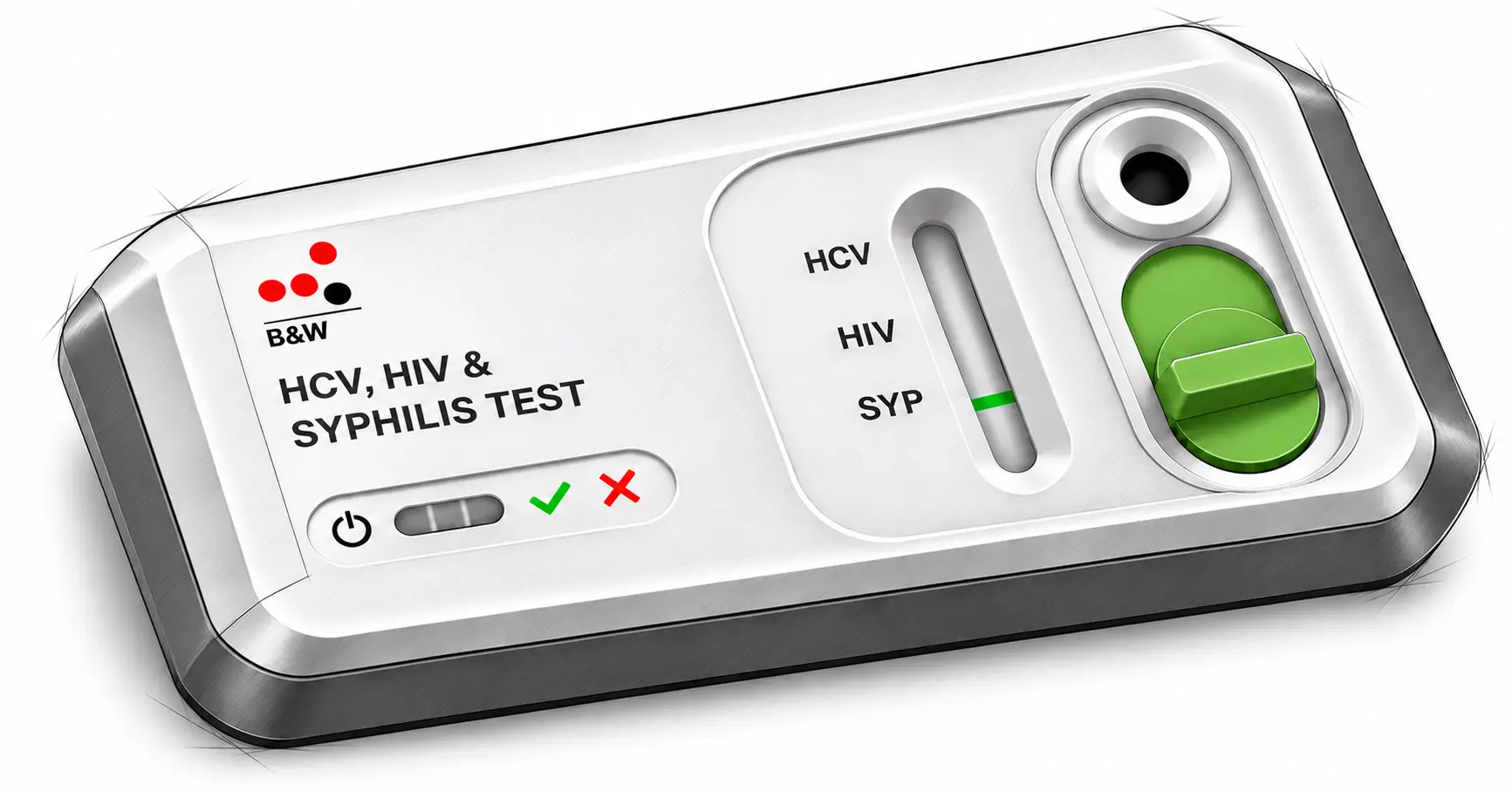
An AI-generated design concept for a diagnostic device.
Criteria are turned into a rating
We apply the key R-strategies—which we derived from the 9R framework for our example—to three selected product characteristics. We evaluate suitability, technical design, and feasibility using matrices.
We describe these characteristics and propose various solution approaches. The team rates the approaches according to a predetermined system: from 1 for “not met” to 5 for “fully met.” We calculate an average based on the individual scores for each solution approach. This average serves as an indicator for how to proceed with each criterion.
Application to Three Selected Functional Areas
These approaches take precedence
The evaluation results in a ranking for further investigation. In the example, “Reduce,” “Rethink,” and “Refuse” are at the top of the list.
Reduce
We first examine where we can reduce the use of materials, packaging, and energy. The short service life makes these approaches particularly relevant for this example.
Rethink
The choice of materials and component integration are being reevaluated. The medical function remains the guiding principle for evaluating potential changes to the product design.
Refuse
We are investigating which components or packaging elements can be eliminated, provided that the required function is maintained.
Justify the next steps
This analysis provides a valid, numerically defined assessment of specific areas of product development. It serves as a basis for evaluating the feasibility of the prioritized approaches and deriving concrete development measures from them.
Whether materials are saved, emissions are reduced, or the environmental footprint is improved can be demonstrated after the adapted sustainability measures have been applied to the finished product.
An Initial Summary
The 9R strategies offer a rapid approach for moving from a “sense of sustainability” to concrete, quantifiable measures. Which criteria we select and how we weight them depends on the specific product, the project, and—to a large extent—the values the client upholds.
Recycling was not the focus of the previous study. However, it is an important evaluation criterion with significant potential for sustainable product development. In this context, we must clarify additional questions: How can composite materials be separated and electronic assemblies be disassembled? What hygiene requirements apply? What logistical prerequisites are missing? Is a new business model needed?
These questions make designing a practical approach more complex. With our 9R assessment approach, we can evaluate these aspects as well.
Assess the sustainability of your product
Would you like to determine which sustainability approaches are suitable for your device? We’ll discuss your current situation with you and identify which criteria are relevant for your next development decision.