Industrial design can be a driving force in bringing products to market faster, putting users at the center, ensuring high quality, and increasing development efficiency. In our daily practice, we see how a well-thought-out design in the early stages sets the course for later market success. Companies in the medical technology and equipment sectors naturally benefit when form and function go hand in hand. After all, a product that looks good on the outside must also prove itself in terms of usability, reliability, and manufacturability. Only then can industrial design unfold its full product benefits.
Early integration of industrial design accelerates the transition from idea to market-ready product. Time is a critical factor: more than half of all manufacturers say they are developing faster than ever before, but over 80% are still looking for ways to speed up the process even further (source: engineeringspot.de). Industrial design creates clear concepts from the outset, allowing us to avoid loops and delays later on. Modern digital tools such as digital twins (LINK to DL) allow us to test products virtually before a physical prototype is built. Through simulation (LINK to DL), our developers discover early on in which situations a system reaches its limits or can be optimized. This allows potential problems in the interaction of all components to be identified and resolved even before the first hardware is built. This understandably leads to significantly shorter development times and faster time-to-market, which gives us a competitive edge in contested markets.
Studies confirm that the use of digital twin technologies reduces overall development time by 20–50% and reduces the need for physical prototypes (Source: https://www.mckinsey.com/industries/industrials-and-electronics/our-insights/digital-twins-the-key-to-smart-product-development). For us as a development service provider, this means that we can complete your product earlier and bring it to approval. From our point of view, this is particularly important in industries with long approval processes, such as medical technology.
We put people first!
Industrial design ensures genuine user-centred design. Good product design translates the requirements of the target group into tangible solutions (https://buw-engineering.com/dienstleistung/industrial-design/). That’s why we involve end users at an early stage and test our designs iteratively on prototypes. Usability is not a “nice-to-have,” but a must! User-friendly products require less support and training, which saves companies money and makes customers happier, according to the Association of German Industrial Designers (Verband Deutscher Industrie Designer e.V.). (Source: https://www.vdid.de/aktuelles/news/detail/2024-04-04-design-als-wettbewerbsvorteil).
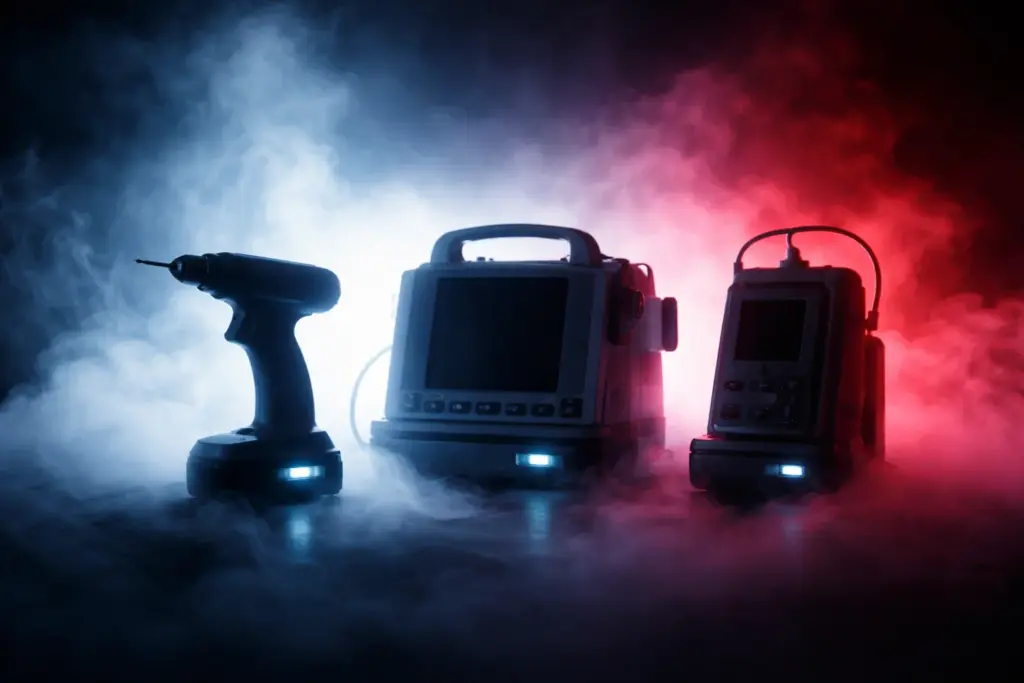
In medical technology, for example, intuitive operating concepts are critical. Here, regulations (e.g., EU MDR) and standards explicitly require proof of usability in order to avoid application errors. Our industrial design process therefore includes targeted usability tests and simulations of user interactions to ensure that the device proves itself in everyday use. Practice shows that devices with good usability—such as infusion pumps developed in collaboration with customers—are actively endorsed by specialist staff and make everyday work on the ward easier. A good example of this are the innovative “Spaceplus Perfusor®” and “Spaceplus Infusomat®” infusion pumps, co-designed with B.Braun Melsungen AG, whose design is not only appealing but also user-friendly. Intensive care unit staff confirm the excellent usability of the devices, which have also won several design awards.
Every button and every display is designed with the user in mind, because a product can only be successful in the long term if it impresses when in use. Industrial design bridges the gap between high-tech innovation and human-centered application.
The highest quality does not happen by chance; it is designed.
Our approach to industrial design ensures that a product is not only “beautiful” but also robust and functional. Right from the concept phase, we select suitable materials and design principles that will withstand the subsequent conditions of use. Choosing the right materials increases the durability and safety of a product, for example. Modern design projects combine special plastics and alloys, for example, to achieve lightness, stability, and corrosion protection at the same time. We use digital simulations to test functionality and resilience at an early stage. Physics-based models provide important insights into the behavior of a product under real conditions, even in the early design stage. Industrial design and engineering artistry flow into one another. What has been optimized virtually proves itself later in practice. A well-thought-out design naturally also reduces sources of error! For example, if displays on the device are easy to read from every angle and the controls are clearly designed, the risk of operating errors is reduced. Simulation and testing of various extreme scenarios make our developments safer even before the first device goes into verification.
For us, quality also means thinking about certification and compliance with standards – industrial design therefore seamlessly integrates requirements (e.g., hygiene and ergonomics standards in medical technology) into the product. This is how we ensure that your product is ready for the market: technically mature, compliant with standards, and reliable in operation …
At B&W, we also use industrial design to make development and manufacturing processes more efficient. With the help of simulations and digital twins, we carry out countless tests virtually – this significantly reduces the number of real prototypes, material consumption, and time required. For example, we can perform flow tests on a digital model instead of “costly wind tunnel tests” and run through new scenarios with a click of the mouse. This speed and flexibility increases the productivity of our development teams. This pays off in the end: Companies that rely on digital development achieve an average of 19% higher efficiency and reduce time to market by 17% (source: https://www.mckinsey.com/industries/industrials-and-electronics/our-insights/digital-twins-the-key-to-smart-product-development).
In addition, we think about the big picture, or design for manufacturing, so to speak. Our industrial designers work closely with our manufacturing specialists to ensure that every component is designed for optimal production. For example, we avoid unnecessarily complex geometries, select standardized components, and pay attention to ease of assembly right from the design stage. Achieve more with fewer resources!
Industrial design is therefore not an end in itself, but a driver of growth. It combines innovation with pragmatism. From the initial digital concept to the production-ready product, we create solutions that inspire aesthetically and deliver measurable benefits. As your development partner, we accompany you through this holistic process. The result is products that stand out in the market: user-centered, high-quality, and efficiently developed.